Showing posts with label wild camping. Show all posts

Friday, 26 September 2014

Goalless Walking

I mentioned previously that my long walk in Sweden had given me a new mindset on walking. So, what would that be then?

In the past I've always seen a walk as a kind of challenge: a list of places to be ticked off; a certain time to get somewhere; a set-in-stone quota of miles to be covered. This hasn't been something I've done consciously as my main reason for walking has always been that it's something I enjoy. But because I do enjoy my walks, I've always found it easy to get distracted. I'll sit and gaze at an idyllic view for twenty minutes, then spend another ten minutes trying to take a perfect photograph of a leaf. Add in distractions like tea-rooms, old churches or obscure little museums and my walk can easily take twice as long as it's 'supposed' to. Although I finish my walk happy, I'll have a little niggle at the back of my mind telling me that I haven't done well enough. On the other hand, when I have to rush to finish the walk to make sure I'm in time for the last bus or that the gates on the car park aren't locked, then I don't feel so happy. I feel like I've missed out.

It should be obvious really shouldn't it? That I should walk with the intention of doing what I want, when I want and enjoying myself rather than trying to achieve some self-imposed target. However, it took a long walk in the Arctic with plenty of thinking time for me to figure this out. 

At first I was concerned that I wasn't putting enough miles in each day; that I was starting too late in the morning; that I was taking too many gorgeous-view breaks. I justified it by telling myself I'd never be here again. If I don't absorb the view fully, or camp at that amazing spot by the waterfall and enjoy pottering around in the sun the next morning, I'll never get another chance. In the Peak District, I can always nip back for another look. In Swedish Lapland? Not so easy. Not when I have to take a plane, then a very long train journey, then a bus ride of several hours to the end of the nearest road, and then walk for a few days to get there. It's easier to come back and walk a part of the trail I haven't touched on, than it is to go back to the sections I've already walked just to see a bit here and a bit there because I rushed it first time round.

Once these thoughts started to sink in I began to relax and enjoy myself a lot more. I was learning to stop feeling guilty about something that there was no reason to feel guilty about anyway. I met lots of Swedish people, including some quite young ones. Although some were rushing along with only a few days to complete a long section of the trail, others were enjoying moving slowly and making the most of their time spent in the wilderness. Rather than rushing from target to target, their goal was to find a nice campsite, cook some good food and chill.

Swedes seem to have a different attitude to the great outdoors. From an early age, it's quite normal to spend time walking, carrying a pack, wild camping and jumping in rivers for a wash. Have you ever tried walking with a five-year-old? If so, you'll know how long it can take to even get a few hundred metres down the road. Everything is fascinating to them. They have to turn every stone, pick up every stick and sometimes sample every worm. Give them a backpack to carry and the chance of finding bits of reindeer antler in the stream beds and you've no chance of getting very far. This is fine. The point of the trip isn't to walk a long way, but to enjoy being in the wilderness.

Once they hit their teens they're chomping at the bit to get out there with their mates. No grown-ups allowed. And you know what? The grown-ups are fine with this. They walk a bit further than when they were younger, but still seem to get far more out of 'just being there' than they do for breaking records of distance or speed walked.

As adults, the annual trip to the wilderness is a time to de-stress away from busy lives in Stockholm or other cities. It's quality time with family and friends, or time to be perfectly alone with no-one else to worry about. Yes they have targets; goals they want to achieve, but the targets are not the main reason for being there. 

So why do I always have this feeling of needing to achieve a goal? Is it a general British attitude to walking? There's no point doing it unless you're going to achieve something? I don't think I'm alone in feeling this. Is it because we don't have any 'real' wilderness to spend days alone in? Even the remotest parts of Scotland are not that far from civilisation. I could have driven to the Highlands three times in the time it took just for the train journey from Stockholm to Lapland. Does this mean we never really shed our city feelings of targets, goals and everything at a specific time? Is it because walking is an 'adult' pastime and so we never have the opportunity to learn lessons from five-year-olds about the joy of going slowly? I know some Brits will take their children on short walks, but I don't know any who wouldn't shudder at the thought of taking them into the wilderness for two weeks at a time.

My time in the wilderness has taught me that the goal of not having a goal can be the best goal to have. Of course sometimes it's good to challenge yourself; to keep yourself on your toes rather than sat on your bum taking yet another gorgeous-view break. And sometimes there is no choice in the matter. Why do so many last buses depart at 5pm even in the long, light summer evenings?

So how am I going to apply these lessons now I'm home? I'll still walk according to other people's criteria, whether that's people I meet (it only took us three hours) or what the guide-book says. Or, more importantly, what the bus timetable says. But I also want to walk without a plan or goal. To just wander wherever I think looks interesting. To stop when I want and where I want for however long I want. Will I achieve this goal? Or am I just setting myself another target that I'll feel guilty about not achieving? Is it even possible to have a target of not having a target? Watch this space ...

When your campsite looks like this, why would you be in a hurry to leave?

Wednesday, 17 September 2014

I've returned ... what next?

I've been home for about 10 days now and I'm slowly getting myself sorted out. As planned, I've spent the summer on a long walk in a long country. I aimed to walk the Kungsleden trail in the far north of Sweden and managed to complete just under half of it before my knees gave out. Although it's disappointing not to have finished the whole thing, I really enjoyed what I did and developed a whole new mindset towards walking. I'll write more about that in another post. I've also got an excuse to go back next year.


Before I went to Sweden, I left my job. Drastic but sometimes these things have to be done. I was getting less and less time to do the things I want to do with my life and to spend time with the people I want to spend time with. Work was, quite literally, taking over my life. I feel a lot calmer and more in control of my life since finishing work. Unfortunately, as I'm not a rich heiress or lottery winner, and I don't have a sugar-daddy to hand, I'll have to find some other means of earning a living. But this time I want it to be on my terms. In the meantime I want to spend some time focussing on things I want to achieve personally.


One of the items on my list is to write a book. I've had ideas roaming around inside my head for years, but they've never seemed quite right when I've come to put them down on paper. My time walking in the wilderness gave me lots of thinking time and I now feel I have the right ideas for a book. I had thought about writing up the walk even when I was at the planning stages. There is very little written on it in English so I'd hope it would be helpful to others wanting to do something similar. This would be one of my USPs. Yes, I've been reading up on what helps a piece of writing to sell and found out all about the need for a USP (Unique Selling Point). I have two USPs. Is that a good thing? The first, as mentioned, concerns the lack of writing about this trail that is currently available in English. The second goes something along the lines of 'stressed, middle-aged woman gives up job and goes off alone for a wander round the Arctic'.


I kept quite detailed diaries whilst I was away and I'm now in the process of writing them up and adding to them. As I read back over them and think about fleshing them out, the book is almost writing itself in my mind. I have so many ideas. I think I'm almost glad I only completed half the walk as I definitely have enough material for one book already!

Sunday, 5 August 2012

Sleeping in my van

I've camped in my van for the last three nights and I'm loving the freedom of it. I left home much later than planned on Thursday and arrived in Oban just after midnight. I found a free car park, rolled out my bed in the back and went to sleep. I had a really good night's sleep and felt comfortable and safe. It would have been much more difficult to find somewhere to pitch my tent. It was dark when I was driving so I couldn't spot any good camping spots from the road.

On Friday I caught the ferry over to Castlebay on the island of Barra at the bottom of the Outer Hebrides. It's a five hour sail and was calm, clear and sunny all the way. We arrived in the early evening to more sunshine. Knowing the good weather wouldn't last and wanting to explore I drove a full circuit round the island's ring road stopping to take photos of the white sandy beaches and looking for a camping spot for the evening.

I drove over the causeway to Vatersay and followed the road finding more white beaches and a lone seal. I also discovered the remains of a second world war plane crash. This reminded me of walks I've done in the Peak District to see similar remains (a more macabre version of being a plane spotter).

Although I saw lots of nice places I would have had to park a little bit back from the sea and not have had the best view. With this is mind I drove back to one of the laybys I'd passed earlier on the west side of Barra and stopped there. Although it was on the main road there were very few vehicles passing. I had the beach and sand dunes in front of me and a rocky grassed over hill rising up behind me on the opposite side of the road.

I wouldn't have been able to pitch my tent here as the layby itself was covered with loose stones, the hill behind was too steep (and I probably wouldn't have got my pegs into the rock anyway), and the sand on the beach was too soft and the tide was coming in. So having my van meant I was able to camp in an amazing spot and have it all to myself. I kept the door open until quite late and opened it early the next morning, sitting in the doorway to eat my breakfast. Last night I camped here again. Another campervan was parked at the far end of the layby, but it was far enough away for us both to have privacy.

I've put a roll-up bed that I've had for years in the back of the van. It's actually meant for a child and is made up of three foam cushions attached together - two larger ones and one smaller one. When it's folded up it makes a chair, the smaller cushion being the back of the chair; when it's unrolled it makes a bed with the smaller cushion being slightly raised at the head. It fits really well in the van and is where I'm planning to build my bed when I convert the van. Down the other side from my bed I have everything stored and although it looks very packed, it's much more organised than I was in my car.

The more I use my van, the more I'm getting the feel for how I want to convert it. I'm glad I didn't rush into anything. Although most of my original ideas still hold, there are a few things I will do differently and other modifications I've realised would be nice to have.

This doesn't mean I'm giving up on my tents though. When I want to get off the beaten track to places I can't access with a car and when I'm walking and carrying all my gear, a tent will be needed. Also, when I'm staying in one place for a while it's better to have everything set up in one place so I don't have to pack things away in the daytime. I'd also have more room in the back of the van during the day.

Thursday, 15 September 2011

Norfolk Coast Path

After speaking to my friend in Norfolk again, we decided to walk the Norfolk Coast Path instead of the Peddar's Way. We like the idea of being beside the sea. Her husband will drop us at the start on the Saturday morning and pick us up at the end four days later. For the three nights on the path we thought about camping, but Valinda doesn't have a tent. We've looked at accommodation and got quite excited by the choices. The first night would be in a hostel and the second in a caravan. Neither of which is particularly exciting, but on our third night we would stay in a windmill. This would be our last night and so would be a nice treat.

Valinda has tried to book everything only to find everywhere is all booked up. Yes, we know it's half term, but it's the end of October in Norfolk for God's sake. What's going on? The one campsite she tried had a minimum stay of two nights, which seems quite bizarre for a campsite on a walking trail.

We still want to do the walk, but may end up borrowing a tent for Valinda and wild camping. At least we still have plenty of time to sort something out.

Tuesday, 30 August 2011

GGW day 7

Wednesday 24th August, 2011

I had a leisurely start to today as I had no need to rush anywhere. I spent the morning walking out to the sea lock at Clachnaharry. This is about a 5 mile round trip and meant that not only had I followed the Great Glen Way in its entirety, but also the Caledonian Canal. The path all the way to the sea lock was busy with dog-walkers, joggers, boats, and residential and business premises. It was a gloriously warm and sunny day and a lovely end to my walk. Except it wasn't the end really, as I still had to get to Inverness Castle.

Back near the campsite I called in at Floral Hall coffee shop for lunch. This is a botanical garden, but as there was an admission charge and I didn't know how much time I'd need to look round it properly, I didn't go in. I'll save it for another time.

I went back to the campsite and spent a bit of time lying around reading before getting packed up for the walk across the Ness Islands to Inverness. The Ness Islands are set in the River Ness and joined by a series of bridges. They are all covered with woodland and make a pleasant park area for the people of Inverness. Finally the path reached Inverness proper and climbed upwards along roads to reach the castle and the GGW start/finish sign.

Once I'd taken the obligatory photos I headed for the train station and sat in the bar with a well-deserved beer before getting the train back to Glasgow.

Distance walked = about 7 miles (2 'official' miles plus the 5 miles to the sea lock and back)

GGW day 6

Tuesday 23rd August, 2011

The final day of the walk proper. I got the same bus as I'd got yesterday morning, but because I was only going as far as Drumnadrochit I was able to start walking a lot earlier.

The path starts by following the A82. At first alongside the road but then on a separate path. A couple of miles in and the path started to climb away from the road. The path joins a forest road and I followed this to the highest point on the whole GGW at 375m. The road then descended for a way to get to Abriachan. This is a kind of woodland outdoor centre with a car park, picnic tables, eco toilets, and lots of bird houses and sculptures. I stopped here for lunch.

A short while further on I bumped into the Canadians again (we'd been passing each other all day) as they were emerging from what seemed to be overgrown brushland. There is a campsite and cafe hidden away in it and they'd just stopped for a cup of tea. Curious, even though I'd already eaten, I picked my way through boggy paths to find it. It's quite a bizarre place run by an eccentric couple. It seems overgrown yet is actually maintained with fruit and veggies growing, chickens roaming about and a pond. I had a freshly squeezed orange juice (yum, vitamins - something I felt I was lacking living on instant noodles and cup-a-soups) and chatted to the couple.

They've owned the land for a few years and live in a caravan on it. They started offering camping as way of getting people to camp officially rather then wild camping and using what is essentially their garden, as a toilet. I got an elaborately hand-written receipt for my orange juice; something to do with placating the tax man.

The path continued on the level and then met the road which I followed across the Abriachan plateau for a couple of mile or so. Then I joined a path which rises again and got my first views of Inverness in the distance. The path began descending and entered a forest through which I walked for several miles. The path then drops steeply into Inverness. I had to stop several times to give me knees a break. Once on the outskirts of Inverness I was back to walking through a housing estate just like at the beginning of the walk.

The path joins the canal again near the campsite. I was about 2 miles (if that) from the end of the walk at Inverness Castle but didn't see the point in walking past the campsite into Inverness, just to walk back out the campsite again, and then walk back in again tomorrow to get the train. So I went straight to my tent instead.

Distance walked = about 16 miles.

GGW day 5

Monday 22nd August, 2011

Up early and trekked to the bus stop. It's quite frustrating having to walk all the way round - walking past my tent 10 mins after I've just left it! I can understand why there's no gate at this end of the campsite because if there was anyone could walk in and there could be quite a security issue. But I'm sure they could have put the vehicleless field nearer the main gate!

The bus back to Invermoriston was a lot more expensive than the one I'd got yesterday. Apparently there are different companies running the routes and they all have different prices. Oh well, it's worth it, not to be carrying my heavy pack. I still have the pack with me as I don't have a daypack with me, but it's almost empty and really light.

Once in Invermoriston I bought a sandwich for breakfast and sat in the shop's garden to eat it. A couple of friendly cats joined me. I wandered round Invermoriston for a few minutes (really, that's all it took) and bumped into the Canadian women again. The men had already set off walking (I saw them several times throughout the day), the women were taking the day off and going to get the bus to Urquhart Castle instead.

The path begins by climbing very steeply along a narrow road behind the shops. In no time at all I was well above them. The path continued to zigzag upwards, though not quite as steeply. It climbs about 215m in the the first mile. It then drops to about 110 metres. The path joins a forest road and continues to descend until it comes alongside the A82. The forest road then climbs again to about 300m before dropping down again to 120m. At least I couldn't complain about it being flat today!

The path climbs again towards Grotaig where it joins a small road. There are some paths at the side of the road, but a lot of the time I was walking on the road itself. This section is about 3 miles long and was very hard on my feet. Then I turned to descend on a gravel path before reaching the A82 and following this into Drumnadrochit.

Drumnadrochit is the main hub for all things Nessie. There are a couple of Nessie exhibitions and lots of cafes and shops. I was too late and too tired to do much more than wait for the bus though.

Distance walked = 14 miles

Monday, 29 August 2011

GGW day 4

Sunday 21st August, 2011


This morning even though it was Sunday the shops were open and the tourists were out in force. I only had 8 miles to go today, but my pack was feeling heavy and my feet were feeling weary. This was the first day where it wasn't flat and I was looking forward to a bit of inconsistency in the terrain.


I was now following Loch Ness and would do until almost the end of my walk. Loch Ness is one of the largest lochs, only Loch Lomond has a larger surface area. By volume however, it is by far the largest, containing more fresh water than all the lakes in England and Wales combined. It is just under 23 miles long and is 1.7 miles across at its widest point. Loch Ness is of course famous for its monster, but though I kept a good look out I didn't catch so much as a fleeting glimpse of it.


Leaving Fort Augustus, the path immediately began to climb. It follows minor roads for a while, but is soon on forest tracks. The path kept its height with a few undulations. It was hard to see the loch for a lot of the time because of the tree cover. But it was also hard to hear (and see) the traffic down below on the busy A82, something which I'm not complaining about. Every now and again there would be a break in the trees and the chance to stop and drink in the view.


At one such viewpoint I was perched on a conveniently placed large, flat rock enjoying coffee from my flask when two older  Canadian couples came along. They were walking the path too, but staying in B&Bs and using a baggage carrying service. I chatted for a while before moving on. I continued to see them on and off throughout the rest of the day.


As it got towards the end of the day I felt I was beginning to tire of carrying my back. The next two days are long days with a lot of hills and a lot of miles and I wasn't sure how I'd go on. I decided to check out buses when I got to Invermoriston to see if it was possible to easily get to and from the Inverness campsite. If I could do this I could leave the bulk of my gear there and sleep there for the remaining three nights just getting a bus at the beginning and end of each day.


Almost at Invermoriston the path dropped steeply through woods to reach the main A82. Unfortunately because of damage to the trees the path had been closed for safety reasons. I had to follow a lane instead which added another couple of miles to my day's walk. I really wasn't in the mood for this. I was tempted to try the path and probably would have done if I didn't have my big pack. When I got to the other end of the path I could look up into the woods and see the damage. It would have been really difficult to get through as trees were all across the path. So I'd made the right decision to follow the detour.


I found a bus stop and checked the timetable. It being a Sunday I was hoping I wasn't too late for the last bus. It was fine and I only had about 20 minutes to wait. The bus dropped me outside the campsite which is actually on the route of the GGW. I could see tents from the bus so thought I didn't have far to walk. Wrong. The campsite is big. And the entrance is at the far end. I had to walk all the way down the side road to get to the entrance. The field for campers without cars was then at the other end of the campsite and so I had to walk all the way back again. I ended up with my tent quite close to the road and the bus stop, yet a good 10-15 minute walk away. I was not a happy bunny. It was good to get my tent up though and know I didn't have to carry it tomorrow.


Distance walked = 10-11 miles (8 'official' miles plus a couple for the diversion and the best part of a mile getting to the field I put my tent up in)

GGW day 3

Saturday 20th August, 2011


A soggy morning. I stayed in my tent for a while and eventually it eased off. I packed up in drizzle rather than a downpour. By the time I started walking it had cleared up well. Today's walk is only 10 miles so I didn't have to be in too much of a hurry.

The path goes along the south side of the canal to the small Loch Oich. There's only about a mile of canal joining these two lochs. When I got to Loch Oich I went into the coffee shop at the Great Glen Water Park for a coffee and an orange juice. It seems like quite a nice place with log cabins scattered throughout the trees.

Leaving the water park the path follows the bed of an old railway line. Part of a station platform can still be seen as can the stone walls that would have been alongside the sunken track. Trains used to run between Spean Bridge and Fort Augustus but the line was never successful due to rivalries between different companies.

The path then follows the remains of one of General Wade's military roads. I sat for a while on a conveniently placed bench and looked across the loch to the ruins of Invergarry Castle. This used to be the seat of the MacDonald clan who supported the Jacobites and Bonnie Prince Charlie. It was burnt down after the battle of Culloden.

After the castle the path moved slightly inland. When it returned to the lochside just before Aberchalder I was surprised at how windy it was beside the loch. Aberchader has a rather pretty old bridge (The Bridge of Oich). It's now only used by pedestrians. This is where Loch Oich ends and the canal begins again. I found a lovely tea garden just by the canal and the bridge and sat with coffee and a cake for a while enjoying the warmth. Now I was back near the canal and away from the loch, the wind had dropped and I hadn't seen rain since this morning. The tea garden had a couple of resident dogs who insisted on playing catch with me, though one really hadn't got the concept of the game and kept forgetting to bring the ball back to me.

Just past the tea garden I crossed a bridge and followed the canal along a path on the north side. This was an even, flat path and, fortified by coffee and cake, I was able to get quite a pace going. I had a break at Kytra lock which was pretty and had nice grass for camping on, but no facilities. I considered stopping, but wanted to get another couple of miles under my belt, so carried on to Fort Augustus.

Fort Augustus is a busy little tourist town with the most people I'd seen since Glasgow. Because of the proximity to houses and businesses camping is not allowed at the lock and so I had to go up the road to the commercial campsite. This was a big campsite with several different camping areas. I was in a field for campers without vehicles. There were four young Spanish people with motorbikes and tents on the far side of the field from me, but that was it. It should have been a peaceful night. It wasn't. The Spanish had set up a kind of communal tent as well as there own individual tents and proceeded to have a very loud party. If it wasn't so annoying, I would have been quite impressed by how much noise could emanate from just four people! I ended up getting quite nowty and shouting over to them to shut up. To their credit, they did, and I was able to get a bit of sleep.

Distance walked = 10 miles

Sunday, 28 August 2011

GGW day 2

Friday 19th August, 2011


I woke feeling much better. It was a beautiful day and the sun had driven all the midges away. I sat at a picnic table for a while having breakfast and just enjoyed sitting in such a lovely place. I couldn't stay too long though and had to rouse myself to get packed away. I appreciated why the guys I'd met yesterday had enjoyed taking so long. If I wasn't on a restricted timetable I would have loved to be able to spend a few hours, if not the whole day, here.

I hoisted my backpack up onto the picnic bench and disaster struck. One of the straps that holds the pack closed caught on the bench and the buckle broke. It was unfixable and wouldn't stay fastened with only half the buckle. Luckily I always have a stash of duct tape wrapped round my walking poles so I was able to use some of this to wrap round the buckle and keep the pack closed. It worked really well, but did mean that to open my pack I had to carefully unwrap the duct tape, stick it on the side of my pack and then carefully peel it off to wrap it round the strap again when it was time to refasten my pack. A whole lot of faffing, but at least I'd fixed it.

I hoisted my backpack up onto my shoulders and disaster struck. (Didn't I write this already?) The waist strap caught on the picnic bench and the buckle broke. I couldn't carry my pack all day without the support of the waist strap so I had to fix it. Duct tape wasn't an option here as it would be too difficult to get the pack on and off. I managed to figured out a way of tying one end of the strap to the other and it held quite well. Maybe it's time I got myself a new backpack.

Finally, I was able to set off. The path headed away from the loch on the north side. It climbed up into a thickly wooded area which seems to have been converted in to a fairy glen. A very large area was filled with glittery and shiny baubles. There were trees that seemed to be fruiting teddy bears or wellington boots. Umbrellas were arranged over fairy tea parties and plastic flowers bloomed. The conservative part of me thought it was an eyesore in such a nice place, but the fun part of me loved it. I don't know who has done this here, or why, but it's certainly different.

The path continued on the north side of Loch Lochy all day. I finished the day at South Laggan locks which at the far end of the lock and where the path joins the canal again. The walk took me through woods all day and although I did get to walk alongside the loch for a couple of miles after the fairy wood, most of the time I was higher than the loch and only got glimpses of it through the trees.

Towards the end of the day it began to rain. It started off quite light, but got heavier and so I had to stop and put wet weather gear on for the first time. It was still raining heavily when I reached South Laggan and had to put my tent up. Luckily it doesn't take long to get the bulk of it up and I could chuck my gear inside whilst I finished pegging it out properly.

There were a lot of boats moored up for the night and a few other campers too, but the area wasn't as nice as Gairlochy locks. Nice enough I suppose, but not the sort of place I'd want to linger even if I did have the time.

Distance walked = 13 miles

GGW day 1

Thursday 18th August, 2011


I got a lift to the local train station and then had to walk between stations in Glasgow to get to Queen St to catch my train to Fort William. The 10 minute walk made me realise how heavy my pack is. I've cut everything down to the bare minimum - I only have one change of clothes, I've rationed out my food, I have no reading books, and so on - so the only way I'd get lighter is to buy more expensive gear. At least it should get lighter as the week goes on and I eat my food.

The train from route from Glasgow to Mallaig is said to be one of the most scenic in the world. I did the Fort William to Mallaig stretch a few years ago when I needed a day off walking to let my knees recover from the descent of Ben Nevis. I went on the steam train in true Harry Potter style over the Glenfinnan Viaduct and it was truly stunning. Now I was getting to do the first bit of that journey that I'd missed out on before. Once we cleared the suburbs of Glasgow the views got better and better and the last bit into Fort William was wonderful.

To get to the official start of the walk I had walk through Morrison's car park and cross a main road to get to a grassy area by Loch Linnhe. This grassy area covers the remains of a fort built in the 1600s. I sat and had lunch at a picnic table and then wandered over to the sign to take a photo. A group of young guys were sprawled beneath it enjoyed a case of lager. They'd just finished the walk and were celebrating. They said they'd spent 2 weeks doing it and had really enjoyed the leisurely pace and being able to camp wherever they found a nice spot. They also warned me that water isn't that easy to get and one of them gave me his platypus complete with 3 litres of water. It was difficult to stuff it into my backpack and meant I had just added another 3 kilos to my already heavy load, but I was grateful. I'd never bought myself a platypus or camelbak as I wasn't sure if I'd get on with them. But now I had the perfect opportunity to test drive one.

The walk begins by taking a path through a housing estate. As much as possible it was beside the River Nevis and in the trees, but there were times when I was just walking down residential streets. About a mile before Corpach and the sea lock the path doubles back on itself and then begins the journey east. I had to do a detour down to the sea lock though to buy a toilet key from the office there. I only rang about key a couple of days ago - if I'd been more organised and rang earlier they would have posted me one out. However, as I wanted to go to the sea lock anyway, it wasn't an issue. The key cost £6 and is a British Waterways Key rather than just a Caledonian Canal key which is what I was expecting it to be. What this means is that I can use it to access toilets and showers at canal locks all over the UK.

It was when I left Corpach that I felt like I was on the path proper. It was getting quite late in the day but as it's August in Scotland there was still plenty of daylight. I was hoping to make it as far as Gairlochy to camp; at the least I wanted to make it to Moy which is a couple of miles before Gairlochy, but knew I'd feel much better if I could complete what is the usual day one leg despite my late start and detour.

The path follows the south bank of the canal all the way to Gairlochy and Loch Lochy, the first of the three lochs I would follow as part of the path. The path is good and very, very flat. So much so, it felt quite monotonous and I could feel my legs seizing up from doing what was essentially the same step over and over. If it continues like this (which it probably will) I could well finish the walk with a case of RSI.

As I came close to Neptune's Staircase I started to see lots of people. Generally the path is very quiet until it reaches a lock or small town. Neptune's Staircase is quite a tourist attraction and many people were standing around photographing the boats passing through the series of eight locks. The following is what Wikipedia has to say about it:


Neptune's Staircase (grid reference NN113769) is a staircase lock comprising eight locks on the Caledonian Canal. It is the longest staircase lock in the United Kingdom, and lifts boats 64 feet (19.5 metres). The locks were originally hand-powered, but have been converted to hydraulic operation. The base plinths of the original capstans are still present, although the capstans themselves are now gone.

The current lock gates weigh 22 tons each, and require a team of three lock-keepers (at minimum) to run the staircase.

It is usual for them to operate on an "Efficiency Basis", that is the keepers try to either fill each cut with boats on the lift or drop, or to allow for passing, ie a dropping craft to pass a rising craft on the same fill/empty cycle.

It takes approx 1 hour 30 minutes for a boat to pass from one end of the staircase to the other, through the eight locks.

It is one of the biggest staircases in Britain, and is kept by British Waterways.

It is located at Banavie, near Fort William just north of Loch Linnhe.

The structure was designed by Thomas Telford.


By the time I got to Moy I was feeling pretty tired and my feet were starting to throb. I was tempted to stop and camp, but decided I could manage another few miles and so pushed on. I was glad I did as Gairlochy is a lovely place to camp. Light was fading and the midges were coming out in force so I threw my tent up in quite a hurry on the soft manicured grass at the side of one of the locks. It was only afterwards when I went looking for the toilet and shower that I realised the building I thought was the toilet block wasn't and the actual one was much further down. So I had a bit of trek each time I wanted to go to the loo, clean my teeth, wash my dishes, etc. I was beyond caring too much and after a shower and something to eat crawled into my sleeping bag really grateful to be able to give my feet a rest. I don't usually have a problem with throbbing feet so have put it down to the hard surface of the path and the repetitive way of walking on the flat.

Distance walked = about 12 miles (10 'official' miles, plus a couple on the detour to the sea lock)

Friday, 26 August 2011

Back home

I'm back home after just over a month away in which I completed two of my challenges. I've wild camped in the UK and walked a long distance path in one go.

My wild camping was quite soft really as in Shetland it's so easy and most of the time I camped near piers where there are toilets and showers. But I did do nine straight nights. I also officially wild camped for a couple of nights on the Great Glen Way as I slept at locks where there are designated wild camping sites (can it be wild camping when it's a designated site?) and I was able to buy a key enabling me to use the toilets and showers at the locks. I've done much wilder wild camping in other parts of the world (particularly Africa) so I know I'm capable of it, I just wanted to break my habit of always relying on campsites when I'm in this country.

As for my long distance walk, I walked the Great Glen Way over 6 days. Technically I finished on the 7th day as I stopped at the campsite in Inverness at the end of day 6. This is right on the route and there seemed no point walking into Inverness just to walk back out again, only to walk back in again the next day to get the train. The walk should have been 73 miles but I did just over 80 as one day there was a 2 mile diversion and I also walked out to both sea locks which aren't included in the official trail. I carried all my gear for the first 4 days, but set up camp in Inverness and bussed back to the walk for the last couple of days when it was long and hilly. I could have done it with all my gear but would have needed more time. As with the wild camping, I have done longer walks than this and carried more gear in other countries, but wanted to do it here just to prove to myself that I'm still up to it.

So right now, I'm feeling pretty pleased with myself.

Saturday, 6 August 2011

Papa Stour

Friday 5th August, 2011


The night before getting the ferry to Papa Stour I drove down to the small harbour intending to camp there. I didn't want to be too far away as there's just one narrow, winding road to get to the harbour and if I got stuck behind a tractor or something I could easily miss the ferry. For the first time I struggled to find somewhere to pitch my tent. There was virtually no flat ground apart from a tiny patch near the toilet block which was so hard I'd never have got my tent pegs in. I thought about sleeping in the little waiting room, but it had a light on a timer or sensor that seemed as though it would be on all night, and there were fishermen coming and going all night. So I ended up piling everything from the back of my car on to the front seats and sleeping on the back seat. It wasn't as uncomfortable as I'd imagined it to be and I did get quite a bit of sleep. But it's reinforced my idea of buying some kind of van that I can easily sleep in the back of when the need arises. I can't afford a proper campervan, but I'm sure I can find something that I can adapt.

Below is the extract from my diary of arrival and first day on Papa Stour.


I woke up and had time for a shower (£1) before getting the ferry over to Papa Stour. There is a shower in with the disabled toilet. It got very hot and I had to keep adjusting it, but it lasted ages. It was drizzling a bit as I waited for the ferry. I spoke to an older woman who was also waiting with her car. Her name was Jane and she was going over for the day as she has land on the island. She told me about camping by the waiting room near the pier. It has a heater which she said I was free to use, just remember to turn it off afterwards. She also asked me not to have a campfire. She said that a few weeks ago a group of people had dug up a patch of grass by the waiting room so they could have a fire. They hadn’t replaced it. The islanders have since replaced it, but it’s quite obvious where it was. As this area of grass is more like a lawn and is well maintained this didn’t go down well. She said another group had removed stones from an old wall to put round their fire. The wall was broken anyway, but is still part of the ‘look’ of the island. I assured her that I’d only be using my camp stove and wouldn’t light any fires.

The ferry journey took about forty minutes and it was raining more heavily when we arrived. Jane pointed out the waiting room to me which is slightly up the road from the pier. It has a great view of the bay and some sea stacks. There was a lot of information on the walls – both community and tourist information. Lots about the history and nature of the island. There were plenty of chairs and a proper kitchen sink. Also a table with a kettle, proper cups and takeaway ones, teabags, coffee, coffee creamer powder,  sugar, hot chocolate sachets and little individual cartons of milk for the tea. This was free with a sign saying to help yourself, but donations to the local history society would be appreciated. Jane came in to top up the supplies. The following morning a couple came in to do the same and said that someone always comes down when the ferry comes in to make sure everything is topped up.

Next to the waiting room was a toilet block, but no shower. The only thing it was lacking. There was enough room for a shower though so who knows in the future. Outside there was the nice lawn perfect for pitching a tent on and a picnic bench.

As it was raining quite heavily by this time I sat in the waiting room and had a coffee. I used my own supplies as I thought I wouldn’t deplete theirs. I did leave a donation though before I left for the use of the facilities. I finished reading ‘Shetland Black’, a slim novel I’d started the night before. The speech parts are written in dialect but it was understandable if  read it ‘out loud’ in my mind. It was quite a dark novel about a small community in the north of mainland imploding. But did cheer up a bit at the end.

As it was still raining I had a second cup of coffee and read through some of the National Geographic magazines that were in the waiting room along with the island’s library book box. After that I decided I had to brave it and put my tent up. Then I had lunch. By this time it was about 2pm and the rain had eased off a lot. I walked up the road to the church, past a few houses, one of which had a beautifully laid out garden. I stopped at the Stofa. Jane had mentioned this and told me that I could find out what it was when I got there. It turned out to be a rebuilding of a traditional Norwegian house. The community had got together with a group from Norway to rebuild it. There had been three houses on the site and two are marked out on the ground. The main house, the Stofa, is the one they’ve partially rebuilt. Dry stone walls surround two sides of it to protect it from the harshest Atlantic weather. The building itself is made from logs; huge logs that have been planed and carved in Norway using traditional techniques. Norway funded part of the project and the Papa Stour community raised the funding for the rest. Part of the agreement was that some young Shetlanders would go to Norway to work with the Norwegians and learn the techniques. Three young men were chosen. One was unable to take up the opportunity as it clashed with his exams. One was a local boy (I think he was from Papa Stour) of sixteen who got permission to take a few weeks out of school to go. The third was from Mainland, in his early 20s and already working as a cabinet maker (or carpenter?). The project was a success and on the information boards are photographs of the logs being worked on out in the open in a town square in Norway and then the challenge of getting them loaded on to ferries and delivered to Papa Stour. Once on the island the house was reconstructed. There’s no roof and the whole thing is not a finished house, but this is intentional and shows the technique quite clearly.

Stofa Reconstruction (from the information boards)

This partial reconstruction was a partnership project between Papa Stour History Group, Norwegian Crafts Development and other Norwegian groups. Craftsmen and students took part in an exchange, passing on traditional skills.

The large logs were worked in Borgen, Norway, using tools and methods typical of the medieval period. They were then shipped to Shetland, before being reconstructed on site.

The original drystone walls were designed to protect the Stofa’s timbers from the prevailing winds and weather. These have been rebuilt on the original foundations with stones from the site.

The Walls

Drystone dykers from Shetland and Norway rebuilt the walls (‘vernemurer’) during the summer of 2007. A protective membrane was used to separate the old masonry from the new.

The long wall is thicker than the gable, to enable it to withstand Atlantic winds. Both walls are wider at the base, and taper slightly towards the top.

The gable is slightly stepped due to the uneven ground surface.

The Timbers

The lowest logs (‘sills’ or ‘svill’) were cut from pine trees growing in Romsdal, and the remaining logs from trees in Granvin.

Trees more than 150 years old were felled from Norwegian forests for the rebuilding of the stofa.

The logs were worked on in Norway, then transported to Shetland by the sailing ship, STATSRAAD LEHMKUHL. The joints for each log were carefully protected for the journey.

The construction was assembled on site in June 2008 by carpenters from Norway and Shetland students. The building measure 7.75 metres by 5.75 metres, with some of the sills (lowest logs) weighing over 500kg.

Da Biggins

Excavations at Da Biggins revealed the remains of a 13th century house. The building found is a stofa (a timber building made from notched logs), and dates to the time when Shetland was part of Norway.

The stofa belonged to Duke Hakon Hakonsson of Norway, and was part of his farm at Da Biggins.

Stofas were smaller, more comfortable buildings than the older Viking longhouses, but bigger than the homes of most Shetlanders.

Dispute at Da Biggins

Some dramatic events took place here at Da Biggins in 1299, when Shetland was part of Norway. At Easter that year a woman called Ragnhild Simunsdatter confronted Thorvald Thoresson, Duke Hakon Hakonsson’s representative in Shetland, the lord of Papa Stour.

She accused him of betraying Duke Hakon by taking higher rents from the farm of Brekasaetr (Bragaster) than was due. Ragnhild accused Thorvald of cheating Hakon. The case came to the Lawthing, Shetland’s parliament, at Tingwall. The lawmen rejected Ragnhild’s allegations, and the court drew up a document giving details of the quarrel. It is Shetland’s earliest surviving written record.

The document tells us that one of the incidents took place in the stofa, which you now see partially reconstructed today.

The Stofa

The building had just one room, with a hearth in the centre, and a door in the middle of the west gable. To the right of it a small extension was built, which archaeologists think may have been an outside toilet. The roof may have come down over the top of the wall, as shown in the reconstruction drawing above.

The wooden floor of the stofa was discovered by a team of archaeologists, led by Dr Barbara Crawford of St Andrew’s University, during excavations from 1977 to 1990.

The log timbers of the stofa must have rotted away and had been removed, but the wooden floor was left in situ and partially survived. It was carbon-dated to between 1200 and 1400.

The team also found the foundations of outer protective walls. Their purpose was to protect the wooden timbers from bad weather.


I then walked up to the church and saw Jane outside tending her sheep so I chatted to her for a while. She’d been the primary school teacher on the island before she retired and had also spent two winters working at the school in Foula. She had handed over five years ago to the teacher who has just left. She had sheep when she was teaching and this got me thinking that I could also have sheep if I was a teacher in Skerries (there is a job going there which I'm seriously tempted by). I could add ‘shepherdess’ to my list of the many jobs I’ve done!

She has about seventy sheep including lambs and has names for at least some of them. I might want to give mine names too, but that might make them seem like pets and be difficult when it comes time to send them to slaughter. Jane has one small, mostly dark brown lamb called Jacobina – she was the runt of a litter of three and was born late, hence the name. She seemed more like a pet and was fussing around Jane and me wanting her head stroked and presumably after food as well.

Jane seemed a really involved member of the community – important in an island of only twenty. Not only did she have her croft and had been the teacher, but she was involved in the local history group and had done most of the fundraising and liaising for the Stofa project.

The island community apparently was in crisis a few years ago when there was a lot of infighting. At the time Ron McMillan wrote ‘Between Weathers’ it almost seemed as if the community wouldn’t survive. But a few families have left (have others moved in?) and things presumably have settled down. I didn’t bring up the topic as I think in the past it had been a sore point and got bad press in the national papers. From the efforts the islanders are going to, to show they are a community and to make visitors feel welcome, I wondered if this was a deliberate thing to move them away from the fragmented recent past and show the outside world that their reputation doesn’t deserve the tarnish.

The church is a small, calm building surrounded by its graveyard. There is more information on the community and for visitors in a small room to the right of the entrance. There were slim books on sale for £5 each by a local author, George P. S. Peterson. They had some history and a lot of poems in dialect in them. I would have bought one as a souvenir and as a contribution (profits go to the history group) but only had a £20 note.

As it was starting to rain again I walked back to the waiting room. I spent the rest of the evening in there reading. Jane popped in on her way back to the last ferry and changed my £20 note so I could buy one of the books tomorrow. The evening cleared and as it got dark I sat in the waiting room until late with the lights off, just gazing at the wonderful view. The stacks (geological features - big stacks of rock standing just off the coast) look stunning in the diminishing light.

Thursday, 4 August 2011

Foula 3

My final day. I was up quite early and had a strip wash and washed my hair in the toilet block. It's very basic and there was only a cold tap, but at least there was no-one around so I was able to take advantage. Then I made a flask of coffee and packed up. I walked back to the pier in thick mist and arrived just after 9am. I had plenty of time before the ferry left at 9.30am, but had just missed seeing the ferry being lowered to the water. I could hear the whirring of the lift through the mist as I walked along the road, but of course could see nothing.

Once on the boat I went into the cabin and stayed there for the whole journey, reading and drinking coffee. It was much colder and windier than on the way out and I was the only passenger. Once we cleared the harbour it was really choppy. The boat was getting tossed all over the place. Brian came into the cabin and offered me a sick bag, but I said I didn't think I'd need it. He was a bit sceptical, but seemed impressed when we arrived and I hadn't needed it. I'm so glad I don't get seasick as I can imagine how horrible that must be on a journey like this one.

Reflecting on my few days in Foula, I feel quite satisfied even though I didn't see or do any of the things I wanted to. For starters, I now have a good reason to go back. But also, I feel like I saw the real Foula. It spends so much time shrouded in mist it wouldn't have been the 'real' experience if I'd had great weather. Also it was so eerie and mystical with the mist, and also so peaceful and calming, that I felt really relaxed and content. People pay a fortune for spas and health breaks to get that kind of feeling, when all they need do is spend a few days living in a tiny tent with a load of sheep in a bog on a remote foggy island.  

Here are a few Foula facts:

  • Population - 30
  • Location - 20 miles west of Shetland Mainland
  • Length - 3.5 miles
  • Width - 2.5 miles (at its widest)
  • Area - 4.8 sqare miles
  • Highest point - The Sneug 418m
  • Shops - 0
  • Pubs - 0
  • Campsites - 0
  • Public transport - 0
  • Ferries - 1 every couple of days
  • Flights - depends on fog
  • Nurses - 1
  • Teachers - 1
  • Lighthouse keepers - 1
  • Sheep - lots

Wednesday, 3 August 2011

Foula 2

I woke up, after my first night on Foula, a short while before before the first plane was due. I was wondering if I'd have to move my tent, but was surprised by how quiet it was. I know it's a tiny airport, but surely there should be some noise? A quick look outside my tent soon confirmed that the mist was back down as heavy and thick as it had been yesterday. No flights then.

Gaada Stack
I stayed in my tent, reading, writing my diary and enjoying some thinking time until the afternoon. Then as the mist started to lift a bit I went for a walk to the north end of the island. I stuck to the road, but as I got towards the north the mist cleared enough that I could see the outline of the tops of the hills (hills I should've been walking in) and I did get to see Gaada Stack which is a spectacular looking arch standing on its own in the sea. It looked particularly good with the mist behind it.


The primary school
Peat drying
On the way down I'd passed the primary school so I had a peer in through the windows. It was a modern building and looked like it had great facilities. There was a big kitchen too, which I couldn't see the point of. Later I was told that the school also contains the community hall and the kitchen is for community events. There are seven children in the school.

Keeping the ferry safe from storms
I walked back down to the pier and saw more seals and took pictures of the boat hanging up. It has to be winched up when not in use to protect it from storms. I passed a couple of the crew members tending their crofts and had a chat with them. As I walked back towards the airport a 3rd crew member pulled up beside me in his car. We had a chat and he checked that I was going out on the ferry next morning. He offered me a lift, which I accepted as I thought it would be nice to chat. He was going to the lighthouse at the south end of the island as one of his jobs is that of lighthouse keeper. The lighthouse is automated and so he just goes once or twice a week to check it. He's about 70 and should be retired, but said that people on the island just tend to keep on working. The oldest islander is a lady of 92. He told me that when people get too old to really manage on their own the other islanders all muck in and help.

We did some off-roading to get to the lighthouse and briefly got stuck. He was only going to pick up a toolbox that the maintenance men had left there. They come once a year and are going to Fair Isle next. They're probably the same ones I saw on Fair Isle last year. I was able to go into the lighthouse with him, though there was nothing exciting to see. Going in sets off an alarm in Edinburgh so he had to phone to say it was him. Otherwise they'd be phoning his house to tell him to go and check it out.

Things Brian told me before dropping me back at my tent are:

  • He's lived in Foula for 35 years, which is half his life.
  • He was captain of the ferry but has now given that up and is an ordinary crew member. He still gets captain's pay but with none of the responsibility.
  • The current captain (Kevin?) worked with him for 24 years before getting the captaincy.
  • Kevin (?) and some other islanders are the great grandchildren of the former laird Ian B. Stoughton Holbourn, whose book I'm reading at the moment. How horrified he would have been to find his descendands being ordinary crofters and ferrymen.
  • The current primary teacher is leaving after 5 years in the job.
  • The new teacher is a woman in her 50s and has a grown up family. She was previously working in Dubai.
  • Brian is a school governor.
  • The nurse is also giving up her job. Although it comes with a salary of £45k and she rarely has to do anything, she's finding it boring as she was used to working in a busy A&E ward before. She and her husband are staying on Foula and have a croft.
  • People on Foula are pretty healthy and don't tend to get ill. Instead they have rather dramatic accidents like rolling their vehicles over up on the tops.
  • Brian has rolled his 4WD twice. The passenger door had a big gap at the top where it had been bent. It had been his wife's car, but she's made him swap and give her his, after he damaged hers.
  • Rent for the croft (and I think for the house) is £8 a year. The landlords tried to put it up recently, but didn't succeed.
  • You can buy your croft and house for ten times the annual rent, but if you buy you're not eligible for grants. So people tend to get all the grants, do their place up and then buy it.
  • Brian hasn't bought his yet, but is now thinking about it as his son has decided to stay on Foula.

He probably told me more, but that's all I remember.

Once back at my tent I cooked and then spent the rest of the evening reading. Later in the evening a man drew up in his van outside my tent and asked if I wanted any fresh fish. I politely declined. The mist had really drawn in again by this time.

During my walk I took photos of some of the many abandoned cars. As there's no way of scrapping them, when they finally die they are just left to rot. Some of them are used for storage and are filled with bags of animal feed and tins of paint. Most people don't bother with things like MOTs, road tax or insurance.

Tuesday, 2 August 2011

Foula

I seem to be getting to more and more remote British islands, but my ultimate goal is St Kilda. This is a small collection of islands (how many does it need to be to count as an archipelago?) way off the west coast of Scotland. It was abandoned by its remaining inhabitants back in the 1930s as they could no longer sustain their way of life there. It's now owned by the National Trust for Scotland and is extremely tricky and expensive to get to.

The nearest I've managed to get so far is Foula, another remote island off the west coast of Scotland. This has come close to being abandoned in the past, but currently has a population of about 30 and seems to be surviving quite well. Foula is the island used to represent St Kilda in old film about the last days on the island.

The journey to Foula is either by a small mailboat or a tiny plane. The island is known for its fog and so the plane is often cancelled. The boat can also be cancelled due to bad weather and so although I was only intending going to Foula for 2 nights, it could have turned out to be longer. The man in the shop in Walls, where I departed from, warned me about this and so I packed a few extra days' food supplies.

I left my car and walked round to the ferry terminal in plenty of time for the 1.30pm departure. However, we didn't leave until about an hour later as the captain had got stuck in fog on his way from Brae. The journey was expected to take about 2.5 hrs which was fairly accurate. There were a few other passengers on the boat as well as a crew of four. The other passengers consisted of a family of four who were on their way to visit the man's sister who'd moved to Foula a year or two before. They'd been booked to fly, but the plane had been cancelled because of the fog.

Foula appearing in the mist
The journey was good, the sea was so calm, no waves at all, though there was quite a big swell. I stood out on deck the whole time hoping to see whales but wasn't lucky. As we got nearer to Foula it started to rain a bit and the weather really closed in. When we first came in sight of Foula it was as a vague shadow in the mist and it was only when we were almost there that I was sure that it was land I was seeing and not just a trick of the light.

We docked and had to climb up a ladder on the side of the pier. Luggage, post and shopping deliveries were piled into a crate and lifted out with a crane. Whilst waiting I watched a couple of seals playing about in the harbour. Then I walked about a mile along the road to the airport where I'd decided to camp. The fog was so dense that although it wasn't far and the airport is in plain sight of the road I still had to get my map and compass out and navigate my way to it. I couldn't see it until I was actually there.

My tent is to the left. Abandoned cars to the right.
There was one fire station building and a tiny waiting room with a toilet and wash basin with cold water. A few abandoned cars were parked in the car park alongside the runway. I wandered around for a while over the boggy ground trying to find a slightly less boggy bit on which to pitch my tent. There only seemed to be one bit and that was quite close to the runway. I was no closer than the cars though, and it wouldn't have been the worst thing in the world if I had to move my tent next morning before the first plane arrived.

Lots of curious sheep watched me pitching my tent. They were all over the runway - I don't know what happens when a plane is due? - does someone have to chase them away? Once my tent was pitched I sat on stone seat and finished my flask of coffee. It was a mild evening and was lovely to be sitting there so alone in the mist, staring at the sheep who were staring right back at me. Apart from the odd 'baa' it was completely silent.  

After a while the mist seemed to be lifting a little so I walked to the far end of the road and back. It was really eerie walking along and seeing shapes looming in the mist. Not knowing if they were houses, sheep or abandoned cars until I was quite close. I could hear a few sounds of life, but saw no-one. On the way back to my tent the mist lifted even more and it started to rain. I gave up my walk as it was getting a bit late anyway, and hibernated in my tent for the rest of the evening.

Friday, 22 July 2011

Plans

I've been trying to get hold of my friend in Glasgow for a while now. As I'm going up to Scotland for the summer and I haven't seen her for a while it would be nice to catch up. Also I was hoping to be able to leave my car with her when I walk the Great Glen Way. I could leave it in Fort William or Inverness but as I'll have a lot of gear in it I'd rather it was somewhere more secure. After several wrong numbers I finally got hold of her this evening.

I wanted to walk the GGW first and then nip back to Glasgow to pick my car up before driving to Aberdeen to catch the ferry to Lerwick. However, because of her shifts it's actually better to do it the other way round as I'll get to see a bit more of her if I stay with her later in August rather than this weekend. So tomorrow I have ring Northlink to try to get booked on to the Monday night ferry. It's usually a 14.5 hr journey but because the Monday night ferries don't call into Orkney it's slightly shorter.

It's not so bad doing the trip this way round as I can do lots of walking in Shetland to get myself trained a bit more ready for my long walk. It also gives me more time to organise things like getting a key for the toilets at the locks along the way. I'll try giving them a call tomorrow as well and see how much it is to rent/buy the key and how I actually collect it.  

I had been planning to leave tomorrow but as I still have lots to do before I'll be ready to leave I've decided to put it off until Sunday. Which is my birthday. And I like going on holiday on my birthday.

Sunday, 17 July 2011

A Quote

Night is a dead monotonous period under a roof, but in the open world it passes lightly, with its stars and dew and perfumes ... What seems a kind of temporal death to people choked between walls and curtains, is only a light and living slumber to the man who sleeps in a field. All night long he can hear nature breathing deeply and freely.

Robert Louis Stevenson

Sunday, 10 July 2011

Thinking about reading

It's not long now until I head up to Scotland for my summer holiday. I'll spend the first week walking the Great Glen Way and then catch the ferry from Aberdeen to Shetland and spend the next 3 weeks there. I'm so busy at the moment trying to get everything at school organised for next year, plus completing my web design course and trying to work on the post grad course, and sorting out umpteen things that keep going wrong in my house and with my car, that I've barely had time to think about the summer and plan for my holiday. Luckily, I've been to Shetland before so I don't have to do too much planning for that, but I do still have some things to think about. One of which is deciding what books to take with me.

I'll be in my car, so for most of time I can carry a good selection. When I'm walking the Great Glen Way though, I want to keep my weight down as much as possible and get rid of things as I go, so I'll probably just take a selection of magazines and as I read them I can rip out the pages and throw them away.

But what books to take ...

Usually I like to read books either by authors from the place where I am or else set in or about the place. Last year I read a lot of books with a Shetland theme, so I don't have that many left to read. So I have to decide whether to read books -

  • about Scotland in general
  • about wildlife
  • that I've started in the past and never got round to finishing
  • from the BBC Big Read list
  • to do with my studies
  • that I think I should have read but haven't yet.

Maybe I'll just take a few from each category and then I can decide what I feel like when I'm there.

Monday, 13 June 2011

To bivvy or not

I'm thinking about bivvies. I'd love to try sleeping in one, but as I don't know anyone with one that I can borrow, I'll have to buy my own before I can try it. I briefly toyed with the idea of getting one to sleep in for when I walk the Great Glen Way as it would be a lot smaller and lighter to carry than my tent. But as it'll probably rain and could well be cold and there's sure to be zillions of midges at some point (it is Scotland after all) I think a week in one might be too much. No matter how much I resent carrying my tent during the day, I'll be really glad of it at night. I'll have room to spread out and cook and sit up and read and feel protected from the weather and the midges. I've used it in really strong Icelandic and Shetland storms and it's had no trouble surviving and I've always been warm and snug inside no matter what the weather's doing outside. So the tent it is. 


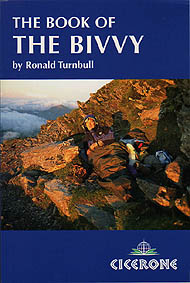
I'd still like to get a bivvy though. A year or so ago, I read Ronald Turnbull's The Book of the Bivvy and found it an informative and interesting read. More recently Alastair Humphreys has had a bit of debate on his website about which are the best bivvies to get. 


Once I get one, then I'll have to think about where to take it to get the full bivvying overnight experience.